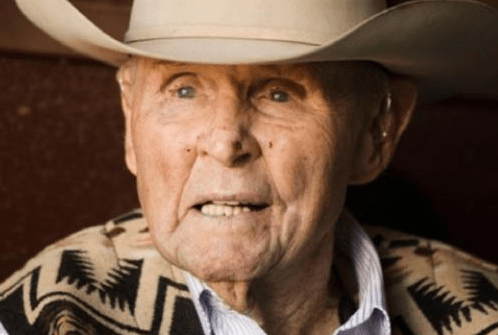
NCHA Rider Hall of Fame
In the world of Western heritage and horsemanship, few names command as much respect as Buster Welch. A figure seemingly carved from the very bedrock of Texas soil, Welch was more than just a cowboy; he was an architect of the modern cutting horse industry, a mentor to generations, and a true icon of the American West. His life story is a sweeping epic of grit, intuition, and an unparalleled connection with horses.
This detailed exploration delves into the life and legacy of Buster Welch, from his rugged beginnings to his legendary status. We will answer the question “who is Buster Welch?” and explore his incredible career, his impact on horsemanship, and even his surprising appearance in popular culture.
The Formative Years of a Cowboy Legend
To understand the man, you must first understand the world that shaped him. Fay Owen “Buster” Welch was born on May 23, 1928, in Sterling County, Buster Welch Texas, a place where the landscape itself dictated the rhythm of life. His early years were marked by hardship; his mother passed away shortly after his birth, and he was raised for a time by his grandparents on a stock farm.
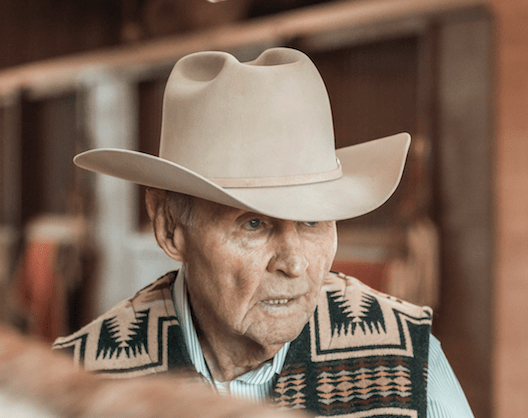
A Young Man Forging His Own Path
The conventional path of school and settlement never quite fit the young Buster Welch. He was drawn to the stockyards, a world brimming with the energy of cattle and the quiet wisdom of seasoned cowboys. By age 13, the call of the open range was too strong to ignore. He left home for good, a decision that set him on a course to become one of the most influential horsemen in history.
The Buster Welch young man found work on some of the most famous ranches in Texas, including the 6666 Ranch, Pitchfork Ranch, and the iconic King Ranch. These were not just jobs; they were his university. He learned to break broncs, manage vast herds of cattle, and, most importantly, he began to develop a deep, almost mystical understanding of the horse’s mind. It was on these sprawling ranches that the foundation of the Buster Welch legend was laid.
The Rise of a Cutting Horse Icon
While Buster Welch always saw himself as a rancher first, his destiny was intertwined with the sport of cutting. Cutting, the act of separating a single cow from a herd, was evolving from a practical ranch chore into a competitive discipline. Welch was at the forefront of this evolution.
The NCHA and a Career Forged in Competition
The National Cutting Horse Association (NCHA) provided the perfect stage for Welch to showcase his extraordinary talents. His ability to train a horse to “read” a cow was unlike anything seen before. His philosophy was built on a partnership between horse and rider, emphasizing the horse’s natural intelligence and athleticism.
His career was a string of monumental achievements. Buster Welch won the NCHA World Championship an incredible four times (1954, 1956, 1974, 1976). Even more remarkably, he holds the record for the most NCHA World Championship Futurity wins, with five titles (1962, 1963, 1966, 1971, 1977). This Futurity is a premier event for three-year-old horses, and Welch’s dominance proved his mastery in developing young equine talent.
The Legendary Horses of Buster Welch
A great horseman is often defined by the great horses he trains, and Buster Welch rode some of the most influential sires and performers in Quarter Horse history.
| Horse | Notable Achievement(s) with Buster Welch |
| Marion’s Girl | 1954 & 1956 NCHA World Champion. Welch considered her the smartest he ever rode. |
| Money’s Glo | Won the first-ever NCHA Futurity in 1962. |
| Chickasha Glo | Won the 1963 NCHA Futurity, giving Welch back-to-back titles. |
| Dry Doc | 1971 NCHA Futurity Champion. |
| Mr San Peppy | 1974 & 1976 NCHA World Champion. An AQHA Hall of Fame inductee. |
| Peppy San Badger | 1977 NCHA Futurity Champion. Became one of the breed’s most influential sires. |
These horses weren’t just champions; they were extensions of the Buster Welch philosophy. His work, particularly with King Ranch horses like Mr San Peppy and Peppy San Badger (“Little Peppy”), created bloodlines that continue to dominate the cutting world today.
The Welch Philosophy: More Than Just Training
What was the secret to the success of Buster Welch? It wasn’t a single technique but a profound understanding of equine psychology. He believed in letting the horse work, not forcing it. He famously said, “If you ask one to do something he was going to do anyway, you hurt his feelings, you insult his intelligence.”
Innovations in Tack and Technique
This philosophy extended to the gear he used. Welch was instrumental in developing and popularizing equipment that is now standard in the industry.
The Buster Welch Saddle Tree
He understood that a horse’s freedom of movement was critical. The Buster Welch saddle tree was designed to allow the horse’s shoulders and back to move without restriction, a key element for the explosive, athletic maneuvers required in cutting. This innovation changed how saddles were made and fitted for performance horses.
The Buster Welch Bit
Similarly, his approach to bridles and bits was about clear communication, not force. The various designs of a Buster Welch bit (or Buster Welch bits) are known for their balance and the specific signals they provide, allowing for subtle cues from the rider. He knew that a light hand and a responsive horse were far more effective than a heavy hand and a resentful one.
The Enduring Influence on Horsemanship
The impact of Buster Welch cannot be overstated. He built what could be considered the quintessential Buster Welch arena—a round pen—a concept that revolutionized training. It allowed for continuous movement, simulating the open range and enabling a more natural and less stressful training environment for the horse.
His generosity as a mentor ensured his legacy would live on. He freely shared his knowledge with competitors and aspiring trainers, elevating the entire sport. He wasn’t just creating champions; he was building a community founded on respect for the horse.
A Pop Culture Phenomenon: Yellowstone Buster Welch
Late in his life, an entirely new generation was introduced to the legend of Buster Welch through an unexpected medium: the hit television series Yellowstone.
In season 4, episode 5, “Under a Blanket of Red,” the character Jimmy is sent to the 6666 Ranch in Texas to learn how to be a real cowboy. In a memorable scene, an old ranch hand points out a quiet, dignified old man and says, “There are three Gods in Texas: the Almighty himself, Buster Welch, and George Strait. You just met one of them.”
That man was Buster Welch himself, making a cameo appearance. The Buster Welch Yellowstone scene was a powerful tribute, introducing his legendary status to millions. The line perfectly encapsulated the reverence with which he was held in the Western world. This appearance led to a surge in searches for “Yellowstone Buster Welch” and “Buster Welch movies,” as viewers scrambled to learn more about the real-life icon. While he wasn’t an actor, his brief, authentic appearance was one of the most talked-about moments of the season.
It’s important to note a common point of internet confusion: some searches mistakenly link his name to Raquel Welch bust size. There is absolutely no relation between the cutting horse legend Buster Welch and the actress Raquel Welch. This is simply a quirk of search engine algorithms combining similar names.
The Man Behind the Legend
Beyond the arena and the accolades, Buster Welch was a devoted family man and a lifelong learner. Despite having only an eighth-grade education, he was a voracious reader with an incredible grasp of history and a deep appreciation for his heritage.
He and his wife, Sheila, who was a formidable cutting competitor in her own right, built a life centered around ranching and horses. They managed vast ranches and continued to contribute to the industry throughout their lives.
Buster Welch Net Worth
While he lived a life defined by passion rather than profit, his immense success naturally leads to questions about the Buster Welch net worth. Pinpointing an exact figure is difficult, as he was a private man. However, considering his decades of winning top-level competitions with huge purses, his highly sought-after training services, successful ranching operations, and the immense value of the horses he trained and bred, his net worth was undoubtedly substantial, estimated by some to be in the millions of dollars.
Passing of an Icon
The Western world mourned when Buster Welch died. His passing on June 12, 2022, at the age of 94, marked the end of an era. The official Buster Welch obituary stated he passed away peacefully at his home in Abilene, Texas.
As for the Buster Welch cause of death, it was attributed to natural causes, a peaceful end to a long and remarkable life. He truly lived up to the phrase from his remembrance: “He stayed horseback until the end.” The legacy of Buster Welch is not one of sorrow, but a celebration of a life lived to its absolute fullest.
Frequently Asked Questions (FAQs)
1. Who is Buster Welch?
Bus ter Welch was a legendary American cutting horse trainer, rancher, and cowboy, widely regarded as one of the most influential figures in the history of the sport. He was a multiple-time NCHA World Champion and Futurity winner, known for his intuitive training methods and for training some of the most famous Quarter Horses in history, like Peppy San Badger and Mr San Peppy.
2. How did Buster Welch appear in Yellowstone?
Bus ter Welch made a cameo appearance as himself in Yellowstone Season 4, Episode 5. In the Bus ter Welch Yellowstone scene, he is at the 6666 Ranch in Texas, where another character refers to him as one of the “three Gods in Texas,” solidifying his legendary status for a mainstream audience.
3. What is Buster Welch famous for?
Buster Welch is famous for revolutionizing the sport of cutting. He holds the record for the most NCHA Futurity wins (five) and won four NCHA World Championships. He developed iconic equipment like the Bus ter Welch saddle tree and pioneered training techniques, including the use of the round pen, that are now industry standards.
4. When did Buster Welch die?
Bus ter Welch died on June 12, 2022, at the age of 94. His passing was mourned throughout the equine and Western communities as the loss of a true icon and a direct link to the heritage of the American cowboy.
5. What was the philosophy of Buster Welch on horse training?
The training philosophy of Bus ter Welch centered on partnership and respecting the horse’s natural intelligence. He believed in guiding a horse rather than forcing it, allowing its “cow sense” to develop naturally. He famously avoided over-schooling his horses, believing it insulted their intelligence and stifled their instincts.