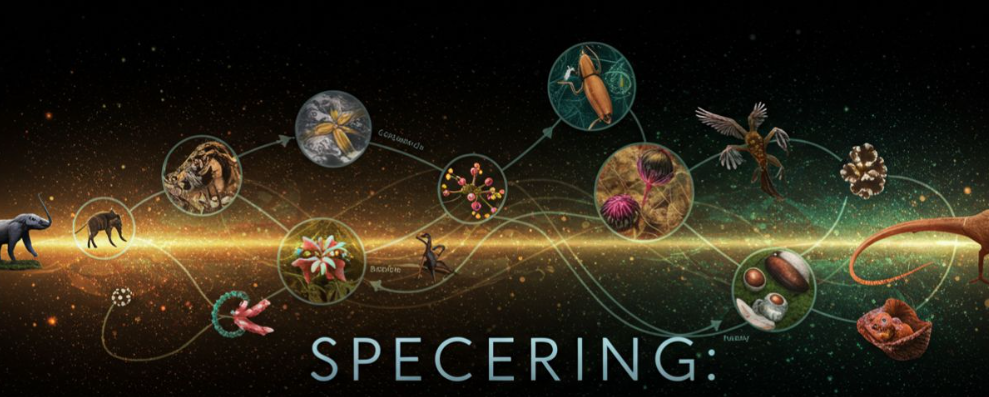
Life on Earth is incredibly diverse, from the smallest microbe to the largest whale. But have you ever wondered how this vast array of species came to be? The answer lies in a fundamental evolutionary process known as speciering. Often referred to by its more common scientific name, speciation, speciering is the engine that drives biodiversity. It’s the process by which a single ancestral species splits into two or more distinct species that can no longer interbreed.
Understanding speciering is crucial not just for biologists but for anyone interested in the natural world. It explains the branching patterns in the tree of life, revealing how organisms adapt to new environments and carve out unique niches. This process is happening all around us, often too slowly for us to see, but its effects are profound. From the finches of the Galápagos Islands to fish in African lakes, the story of life is a story of speciering. This guide will explore every facet of this incredible phenomenon, from its core mechanisms to its modern-day implications.
Decoding Speciering: The Core Principles of Evolutionary Divergence
At its heart, speciering is about the creation of new species. But to grasp this, we first need to understand what a “species” is. While it seems simple, defining a species can be complex. Biologists use several concepts to classify organisms, each with its own strengths.
Foundational Concepts for Understanding Species
To fully appreciate the process of speciering, it’s helpful to know the different ways scientists define a species. These concepts provide the framework for identifying when speciering has successfully occurred.
The Biological Species Concept (BSC)
The most widely known definition is the Biological Species Concept. It defines a species as a group of individuals that can interbreed in nature and produce viable, fertile offspring. Reproductive isolation—the inability to breed with other groups—is the key marker of a distinct species under this concept.
The Morphological Species Concept (MSC)
This concept classifies species based on physical characteristics. It groups organisms by similarities in shape, size, and structure. The MSC is useful for classifying fossils or organisms where reproductive behavior cannot be observed.
The Phylogenetic Species Concept (PSC)
Using genetics and evolutionary history, the Phylogenetic Species Concept defines a species as the smallest group of individuals that share a common ancestor. It focuses on the branching patterns of evolutionary trees, often using DNA analysis to map relationships.
The Ecological Species Concept (ESC)
This concept defines a species based on its ecological niche. It emphasizes the role an organism plays within its ecosystem, including its diet, habitat, and interactions with other organisms. Two groups occupying different niches might be considered separate species, even if they look similar. A clear understanding of these concepts is essential for studying speciering.
The Mechanisms Driving Speciering: How Does It Actually Happen?
Speciering is not a single event but a gradual process driven by several interconnected mechanisms. These forces work together over generations to create enough genetic and behavioral divergence to form a new species. The interruption of gene flow between populations is the critical first step.
Genetic Variation and Mutation: The Raw Material for Change
Genetics is the foundation of speciering. Every population has a pool of genetic variation, and mutations constantly introduce new traits. These changes, from simple point mutations to larger chromosomal rearrangements, are the raw material upon which other evolutionary forces can act. Without this underlying variability, populations could not adapt or diverge. This genetic groundwork is the starting point for any speciering event.
Natural Selection: The Pressure to Adapt
Natural selection is a primary driver of speciering. As environments change, certain traits become more advantageous for survival and reproduction. Individuals with these traits are more likely to pass them on, causing the population to evolve over time. When two populations face different environmental pressures, they will adapt in different ways, leading to divergence. For example, a population in a cold climate might evolve thicker fur, while a related population in a warmer area does not, accelerating the speciering process.
Genetic Drift: The Element of Chance in Speciering
Genetic drift describes random changes in the frequency of genes within a population. It has a much stronger effect in small populations. Two key scenarios where genetic drift can lead to speciering are:
- The Bottleneck Effect: This occurs when a population is drastically reduced by a natural disaster or human activity. The surviving individuals may have a different genetic makeup than the original population, simply by chance.
- The Founder Effect: This happens when a small group of individuals breaks off from a larger population to colonize a new area. The new population’s gene pool will be limited to that of the founders, which can lead to rapid divergence from the ancestral group.
Reproductive Isolation: The Point of No Return
For speciering to be complete, populations must become reproductively isolated, meaning they can no longer interbreed. This isolation prevents gene flow and allows the two groups to evolve along separate paths. There are two main categories of reproductive barriers.
Pre-zygotic Isolation: Barriers Before Fertilization
These barriers prevent mating or fertilization from ever happening.
- Habitat Isolation: Populations live in different habitats and do not meet.
- Temporal Isolation: Populations breed at different times of day, seasons, or years.
- Behavioral Isolation: Populations have different courtship rituals or mating calls.
- Mechanical Isolation: Physical differences in reproductive organs prevent mating.
- Gametic Isolation: Sperm from one species cannot fertilize the eggs of another.
Post-zygotic Isolation: Barriers After Fertilization
These barriers occur after a zygote (fertilized egg) has formed, usually between two different species.
- Reduced Hybrid Viability: The hybrid offspring do not survive long after conception.
- Reduced Hybrid Fertility: The hybrid offspring are sterile and cannot reproduce (e.g., mules).
- Hybrid Breakdown: The first generation of hybrids is fertile, but their offspring are weak or sterile.
The development of these barriers is a definitive sign that speciering has occurred.
The Four Main Types of Speciering
Biologists classify speciering into four main types based on the geographical distribution of the populations involved. Each type describes a different scenario for how gene flow is interrupted.
Allopatric Speciering: Divergence Through Geographic Separation
Allopatric speciering is the most common form of speciering. It happens when a population is divided by a physical barrier, such as a mountain range, a river, or an ocean. Separated from each other, the two populations evolve independently. They adapt to their local environments and accumulate genetic differences through natural selection and genetic drift. Over a long period, they may diverge so much that they can no longer interbreed, even if the barrier is removed.
Sympatric Speciering: Divergence Within the Same Area
Sympatric speciering is more controversial and less common. It occurs when a new species evolves from a single ancestral species while inhabiting the same geographic region. There is no physical barrier to gene flow. Instead, divergence is driven by other factors, such as:
- Ecological Niche Specialization: Subgroups within a population may start to use different resources or habitats. For example, some individuals may adapt to feed on a new type of plant, leading to reproductive isolation from the main population.
- Polyploidy: A common mechanism in plants, this involves errors during cell division that result in an organism having more than two sets of chromosomes. This can create a new species almost instantly because the polyploid individual can no longer reproduce with the original diploid population.
Parapatric Speciering: Divergence in Adjacent Habitats
Parapatric speciering occurs when populations are not completely separated but occupy adjacent territories with a narrow contact zone where interbreeding can occur. However, the two habitats have different environmental conditions, creating strong selective pressures that drive divergence. Although there is some gene flow, individuals tend to mate with their geographic neighbors. This limited mixing, combined with different selective pressures, can lead to the formation of a new species.
Peripatric Speciering: Divergence in a New, Isolated Niche
Peripatric speciering is a special case of allopatric speciering. It happens when a very small group of individuals becomes isolated at the edge of the larger population’s range. The founder effect and genetic drift play a significant role due to the small population size, leading to rapid genetic changes and the formation of a new species. This type of speciering is thought to be common in island colonizations.
| Type of Speciering | Geographic Barrier | Population Size | Key Driver(s) |
| Allopatric | Yes (e.g., river, mountain) | Large | Natural selection, genetic drift |
| Sympatric | No | Large (within the same area) | Niche specialization, polyploidy |
| Parapatric | No (adjacent habitats) | Large | Different selection pressures, limited gene flow |
| Peripatric | Yes (peripheral isolation) | Small (founder group) | Genetic drift, founder effect |
Human Influence on the Speciering Process
Humans have become a powerful evolutionary force, capable of both accelerating and halting the natural process of speciering. Our activities have profoundly reshaped the evolutionary trajectories of countless organisms.
How Humans Can Accelerate Speciering
While often unintentional, some human activities create conditions ripe for speciering.
Habitat Fragmentation and Urbanization
Building roads, cities, and farms divides natural habitats, creating isolated pockets of wildlife. This artificial geographic isolation can function like a natural barrier, driving allopatric speciering. Urban environments themselves create unique selective pressures, leading to rapid adaptation in city-dwelling animals like birds and rodents. This focus on urban speciering is a growing field of study.
Artificial Selection and Domestication
For millennia, humans have engaged in artificial selection by selectively breeding plants and animals for desired traits. This has led to the creation of new breeds of crops, livestock, and pets that are often reproductively isolated from their wild ancestors. This is a form of human-guided speciering.
Introduction of Invasive Species
When humans introduce a species to a new environment, it can lead to rapid evolutionary change. The invasive species might hybridize with native ones, sometimes creating new hybrid species. Alternatively, native species may evolve new defenses or behaviors to cope with the invader, a potential first step toward speciering.
How Humans Inhibit Speciering and Drive Extinction
Unfortunately, human impact is more often destructive, halting the process of speciering and driving species toward extinction.
Habitat Destruction and Deforestation
The outright destruction of habitats, particularly in biodiversity hotspots like rainforests, is the leading cause of extinction. When habitats disappear, the populations that rely on them vanish, taking with them any potential for future speciering.
Pollution and Climate Change
Chemical pollution can disrupt reproductive cycles and cause mutations that reduce fitness. Global climate change is forcing species to migrate or adapt at an unprecedented rate. Many species cannot keep up, leading to extinction and a net loss of biodiversity, overwhelming the slower pace of natural speciering.
Homogenization of Environments
Globalization and human travel can break down natural geographic barriers, allowing previously isolated populations to mix. This increased gene flow can reverse the divergence that leads to speciering, merging distinct lineages back into a single one. This is sometimes called “reverse speciering.”
Modern Research and the Future of Speciering Studies
The study of speciering is more exciting than ever, thanks to advances in technology. Scientists are no longer limited to observing physical traits or fossil records.
The Role of Genomics and DNA Sequencing
Genomics has revolutionized the study of speciering. By sequencing the entire genomes of different populations, researchers can pinpoint the exact genetic changes responsible for divergence. They can track gene flow, identify genes under selection, and build highly accurate evolutionary trees. This genetic lens allows us to see speciering in action at the molecular level.
Computational Modeling and AI
Scientists can now use powerful computer models and artificial intelligence to simulate speciering events over thousands of generations. By inputting data on environmental conditions, genetic variation, and population dynamics, these models can predict how a species might evolve and diverge under different scenarios. This is invaluable for understanding past events and forecasting how species will respond to future changes, like climate change. The future of speciering research is bright.
Real-Time Evolution Studies
Some organisms, like bacteria and fruit flies, have very short generation times. This allows scientists to observe speciering as it happens in the laboratory. By manipulating environmental conditions, researchers can watch populations adapt and diverge in real-time, providing direct evidence for the mechanisms of speciering. These experiments offer powerful confirmation of evolutionary theory.
Frequently Asked Questions (FAQs) About Speciering
- What is the difference between speciering and evolution?
Evolution is the broad process of change in the heritable characteristics of biological populations over successive generations. Specie ring is a specific outcome of evolution where a lineage splits into two or more distinct species. In other words, specie ring is the process that creates new branches on the tree of life, while evolution is the overall process of change that occurs along those branches. - How long does speciering take?
The timeframe for specie ring can vary dramatically. In some cases, like polyploidy in plants, it can happen in a single generation. In other cases, particularly for large animals with long generation times, the process of divergence can take thousands or even millions of years. The rate of specie ring depends on factors like the strength of selective pressures, the size of the population, and the degree of gene flow. - Can humans witness speciering?
Yes, although it’s rare to see the full process from start to finish in long-lived species. Scientists have observed specie ring in organisms with rapid life cycles, such as fruit flies, yeast, and bacteria, both in the lab and in the wild. For example, the apple maggot fly began to diverge into a new species in North America just a couple of hundred years ago after apples were introduced. This ongoing specie ring event is a classic example. - Can species merge back together?
Yes, this process is sometimes called “speciation in reverse” or hybridization. If two closely related species that have recently diverged come back into contact and are still able to interbreed, the gene flow between them can erase the genetic differences, effectively merging them back into a single species. This is more likely to happen if the reproductive barriers are not yet fully established. - Why is studying speciering important?
Studying specie ring is fundamental to understanding the origin and maintenance of biodiversity. It helps explain why our planet is home to millions of different species. This knowledge is critical for conservation biology, as it allows us to identify unique evolutionary lineages, protect habitats that foster biodiversity, and make informed decisions about managing endangered species. A deep understanding of specie ring is essential for preserving the web of life.